
The Election Commission of India (ECI) has launched a Special Intensive Revision (SIR) of electoral rolls across 12 States and Union Territories, marking a renewed push to ensure the accuracy, inclusivity, and credibility of India’s voter lists. This exercise gains significance as India gears up for upcoming assembly and local body elections, reaffirming the ECI’s constitutional mandate to uphold free, fair, and transparent elections.
With India’s voter base exceeding 96 crore, maintaining clean and up-to-date electoral rolls is essential for the smooth functioning of the world’s largest democracy. The Special Intensive Revision focuses on identifying duplicate entries, correcting data errors, and enrolling newly eligible voters—especially those turning 18 years old on the qualifying dates.
The initiative comes at a time of increased migration, urbanization, and demographic shifts, all of which make voter verification and inclusion more challenging yet crucial for ensuring representational accuracy.
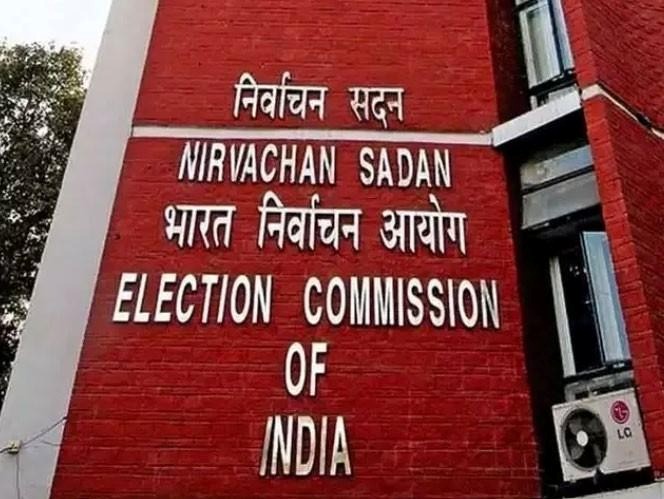
An electoral roll is an official list of all eligible voters in a constituency, prepared as per the Representation of the People Act, 1950. It is the foundation of the democratic process, translating the constitutional right of universal adult suffrage (Article 326) into reality.
Accurate electoral rolls:
The Special Intensive Revision is undertaken when large-scale demographic changes or upcoming
major elections require comprehensive verification of voter data.
To build an error-free, inclusive, and dynamic voter list that reflects ground realities accurately.
India’s electoral framework is rooted in several constitutional provisions:
The Representation of the People Acts (1950 & 1951) operationalize these provisions—governing the
preparation of electoral rolls, conduct of elections, and qualification/disqualification of candidates.
The Indian electoral process comprises several well-defined stages:
The Model Code of Conduct (MCC) is a set of ethical guidelines ensuring fair campaigning and a level
playing field during elections.
The MCC ensures ethical conduct, transparency, and public trust in the electoral process, reinforcing
democratic fairness.
The Chief Election Commissioner and Other Election Commissioners (Appointment, Conditions of Service, and Term of Office) Act, 2023 marked a major institutional development in India’s electoral framework.
This law, therefore, represents a turning point in debates over the autonomy and accountability of
India’s electoral institutions.
The Election Commission has modernized electoral management through technology-driven initiatives:
These initiatives reflect India’s progress toward a digitally empowered, transparent, and inclusive electoral ecosystem.
Despite continuous reforms, challenges persist:
To strengthen the integrity and inclusivity of the electoral process:
The Special Intensive Revision of Electoral Rolls underscores India’s resolve to safeguard the purity and inclusiveness of its democratic process. Combined with recent legislative and technological reforms, these efforts aim to strengthen electoral integrity and citizen trust.
However, the passage of the Chief Election Commissioner and Other Election Commissioners Act, 2023 has reignited debates over institutional autonomy. For India’s democracy to remain vibrant, the Election Commission must not only be constitutionally independent but also perceived as impartial and fearless.
A forward-looking electoral ecosystem—transparent, participatory, and technologically robust—will ensure that every eligible citizen’s voice is heard, securing the democratic foundations of the world’s largest republic for generations to come.
| Topic | Key Facts |
|---|---|
| Special Intensive Revision of Electoral Rolls 2.0 |
|
| Chief Election Commissioner & Other EC Act, 2023 |
|
| Model Code of Conduct (MCC): Evolution & Importance |
|
| Constitutional & Institutional Framework |
|
| Electoral Rolls & Their Importance |
|