
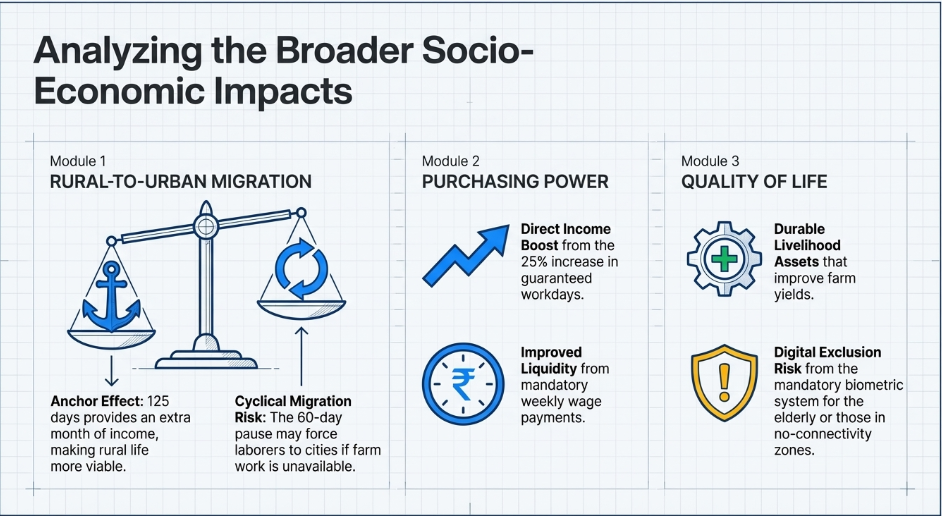
The Viksit Bharat – Guarantee for Rozgar and Ajeevika Mission (Gramin), or VB-G RAM G Act 2025, marks a transformative shift from the demand-driven MGNREGA to a supply-oriented, infrastructure-focused framework. By increasing the work guarantee to 125 days and introducing a 60-day “agricultural pause,” the Act seeks to balance laborer income security with farm labour availability, driving rural prosperity through high-quality, climate-resilient assets.
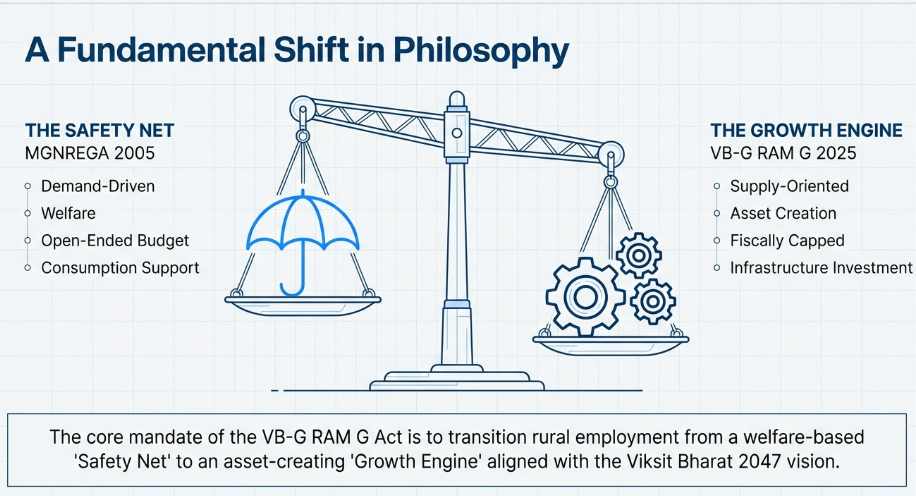
Core Mandate: To transition rural employment from a “Safety Net” (Welfare) to a “Growth Engine” (Asset Creation) aligned with the Viksit Bharat 2047 vision.
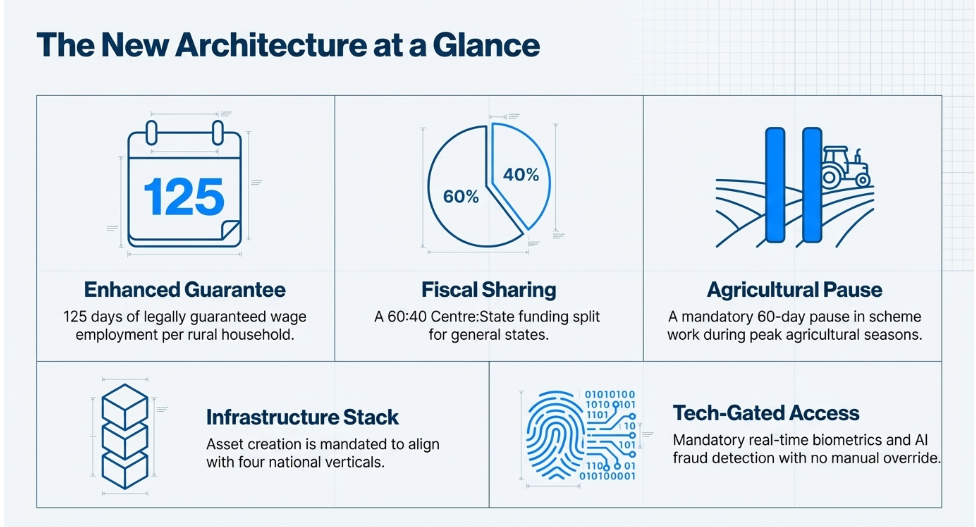
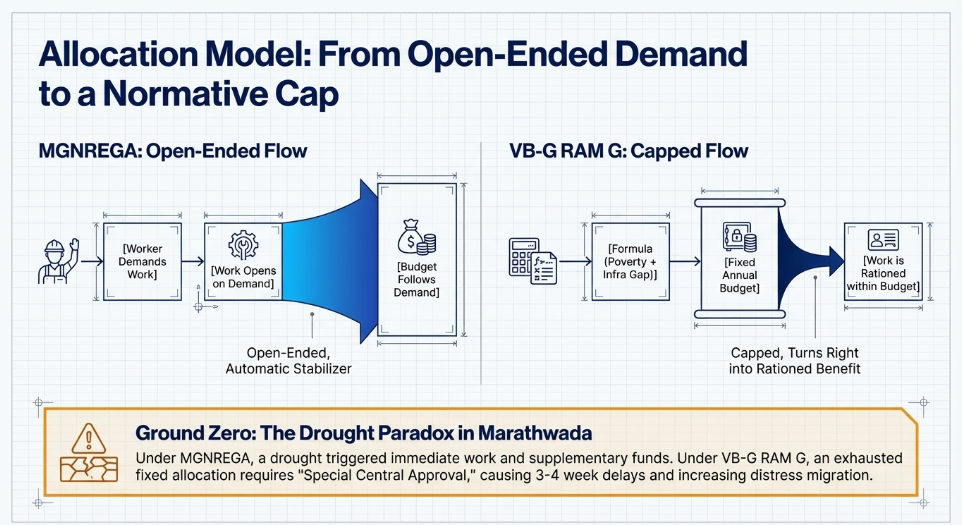
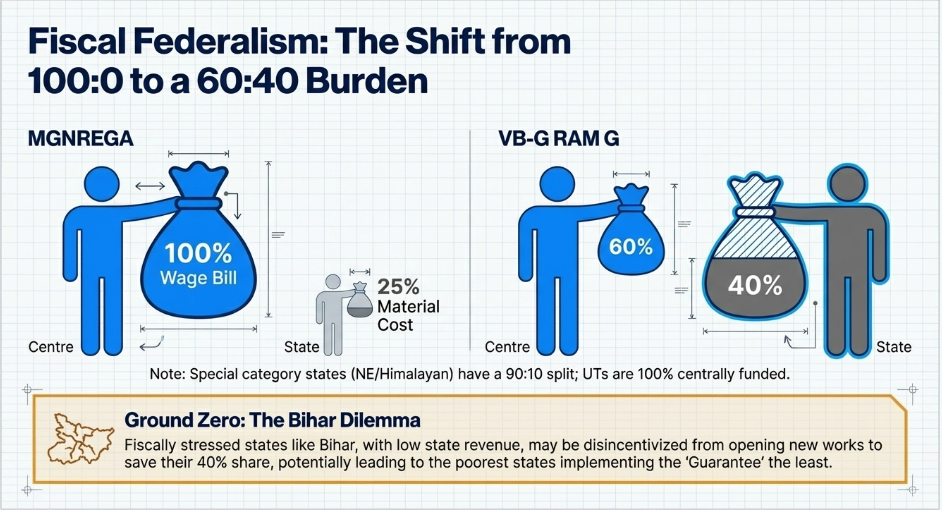
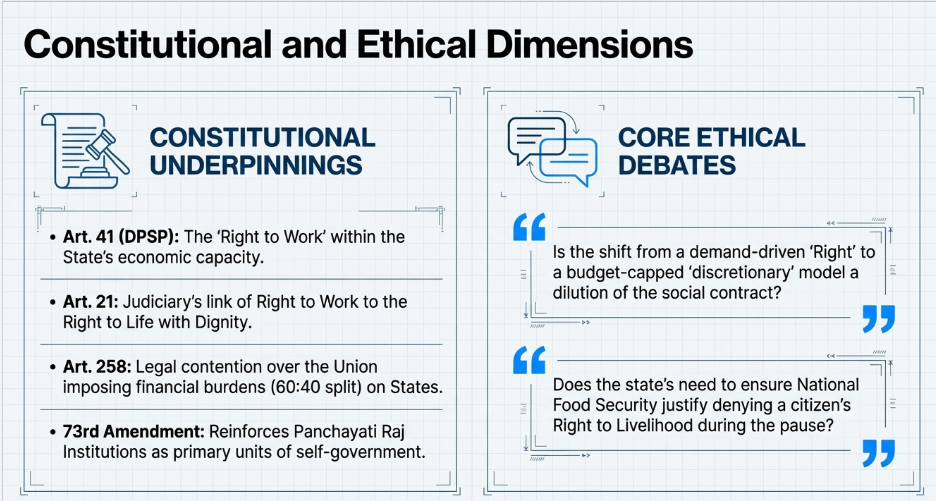
MGNREGA’s Centre-funded 100% wage bill, with states covering only 25% of material costs, incentivized poorer states to maximize work. VB-G RAM G introduces a 60:40 (Centre:State) split for general states.
Ground Zero Scenario (The Bihar Dilemma):
Bihar, despite high rural poverty, has low state revenue (fiscal deficit). The 60:40 wage rule means the fiscally stressed state may discourage new works to save its 40% share, potentially leading to the poorest states implementing the ‘Guarantee’ least.
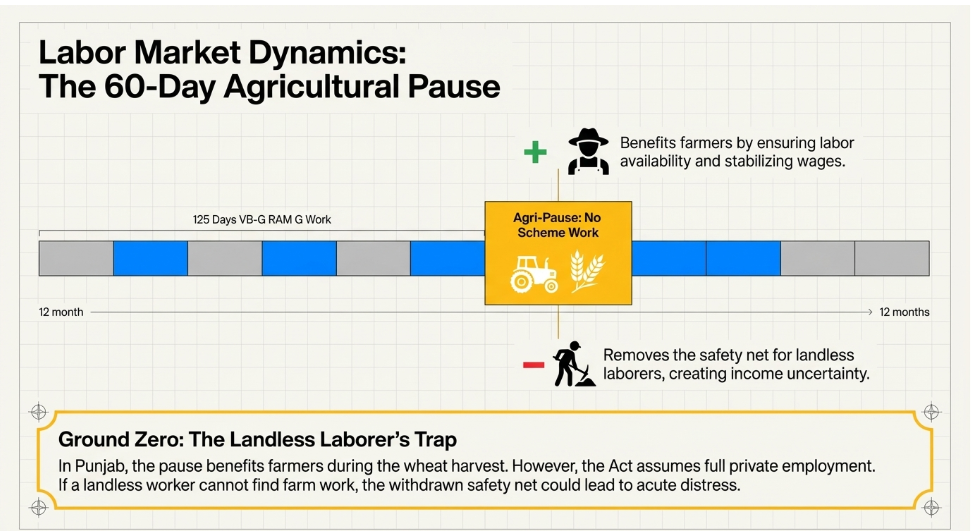
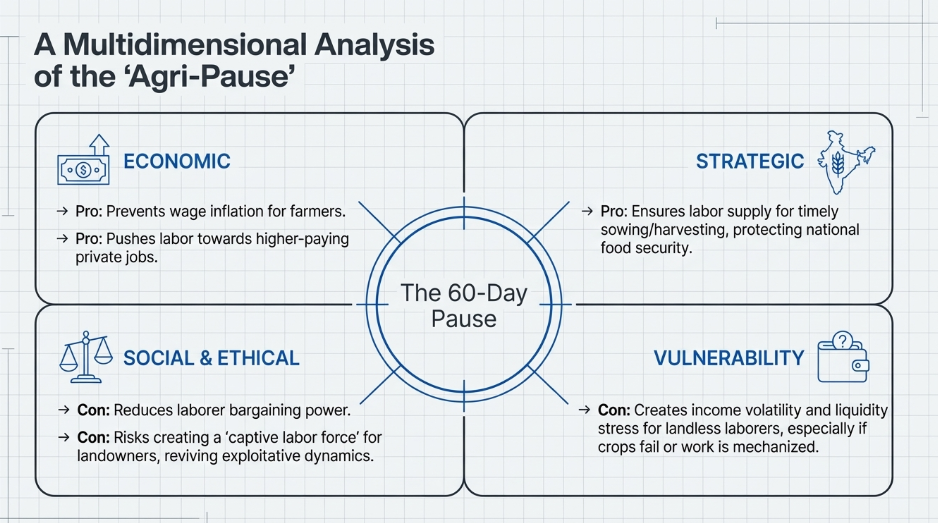
MGNREGA is criticized by farmers for inflating wages and causing labor shortages during harvest. The VB-G RAM G scheme counters this by mandating a 60-day “Agri-Pause,” suspending scheme work during sowing/harvesting periods.
Ground Zero Scenario (The Landless Laborer’s Trap):
The VB-G RAM G Act, set in Punjab/Western UP during the April wheat harvest, significantly benefits farmers by stabilizing wages and increasing labour. However, a key critique is that the Act assumes full private sector employment; if a vulnerable, landless worker cannot find farm work and the government’s safety net is withdrawn during the “Pause,” they face starvation.
MGNREGA: Prioritized Gram Sabha autonomy; assets, even if not technically durable (e.g., small mud roads), were built based on local demand. VB-G RAM G: Mandates alignment with the National Infrastructure Stack. Assets must be technically durable and fit into 4 verticals: Water, Roads, Livelihood, and Disaster.
Ground Zero Scenario (The Asset Quality Trade-off):
While “mud roads that vanish” are replaced by productive “Cattle Sheds” and “Check Dams,” a tribal hamlet’s request for a playground is rejected by the “National Stack” due to the “Economic Productivity” focus, sacrificing Gram Swaraj for technocratic efficiency.
MGNREGA: Had manual fallbacks (Paper Muster Rolls) when machines failed. VB-G RAM G: Mandates Real-time AI Biometrics and Geo-fencing for attendance. No manual overrides allowed to prevent corruption.
Ground Zero Scenario (The Connectivity Divide):
Due to intermittent internet at a remote Arunachal Pradesh worksite, the AI Face-Recognition app failed to upload attendance, resulting in workers being marked “Absent” and denied wages, illustrating “Digital Rights Exclusion” under VB-G RAM G.
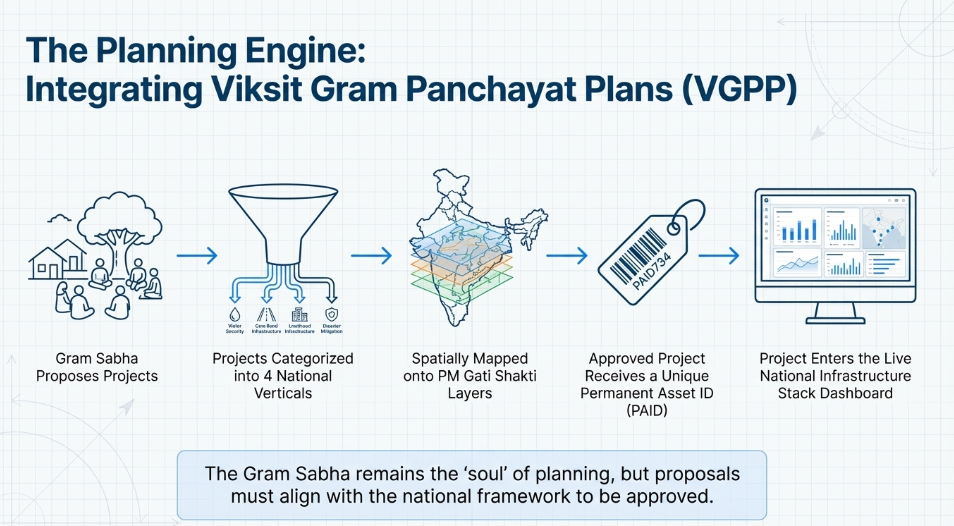
Under the new law, a project is only approved if it originates from this bottom-up plan and is mapped onto the Viksit Bharat National Rural Infrastructure Stack, which is integrated with the PM Gati Shakti National Master Plan.
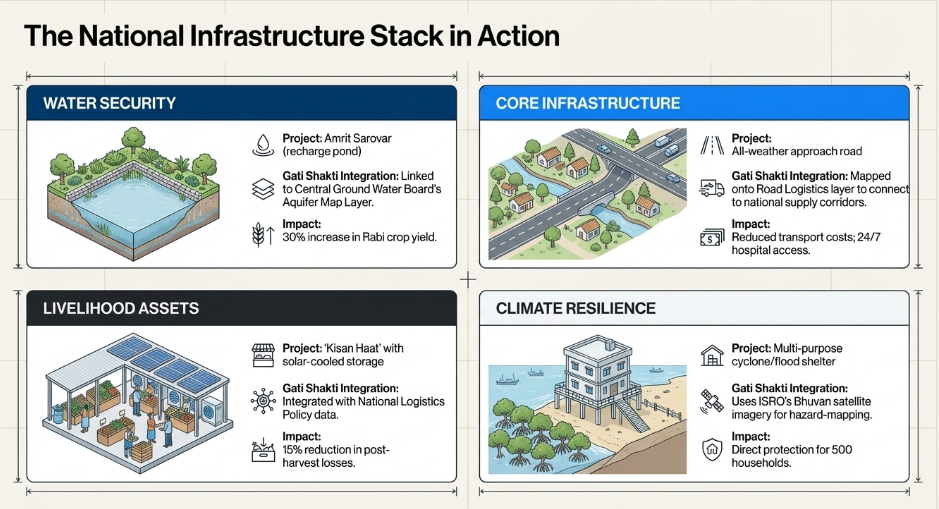
Every asset in the table above is no longer “invisible” after it is built. It becomes a digital data point in the National Infrastructure Stack:
In this new system, the Gram Sabha acts as the local “Board of Directors”:
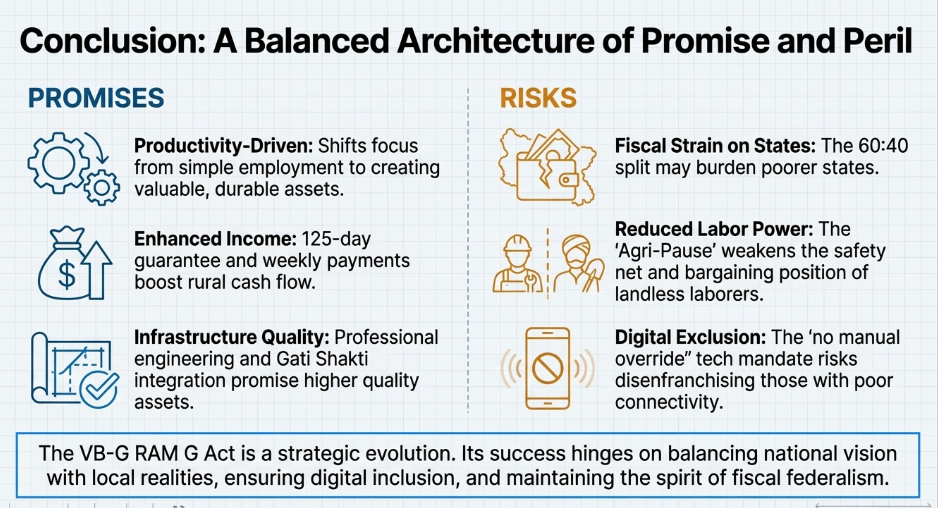
The VB-G RAM G Act 2025 marks a strategic evolution from a pure safety net to a productivity-driven mission. While the 125-day guarantee and infrastructure focus promise enhanced rural incomes and durable assets, the 60-day agricultural pause and 60:40 funding split pose risks of reduced labour bargaining power and fiscal strain on states. Moving forward, success depends on ensuring digital inclusion, maintaining state-level financial flexibility, and rigorously auditing asset quality to ensure long-term rural resilience.