
special intensive revision ECI

EC Announces Special Intensive Revision of Electoral Rolls in 12 States and UTs

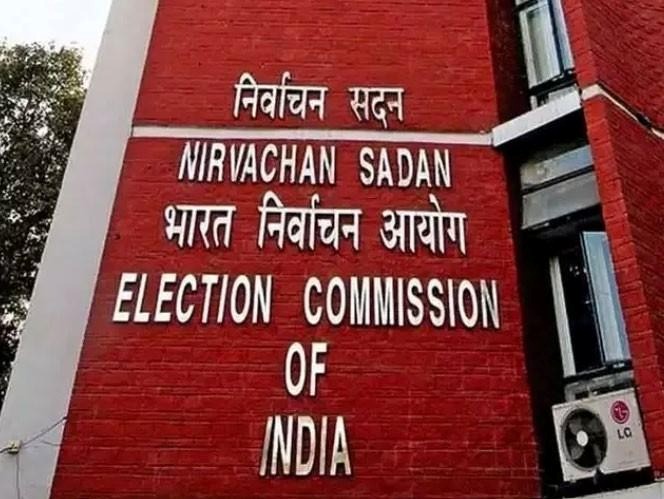
The Election Commission of India (ECI) has launched a Special Intensive Revision (SIR) of electoral rolls across 12 States and Union Territories, marking a renewed push to ensure the accuracy, inclusivity, and credibility of India’s voter lists. This exercise gains significance as India gears up for upcoming assembly and local body elections, reaffirming the ECI’s constitutional mandate to uphold free, fair, and transparent elections.

With India’s voter base exceeding 96 crore, maintaining clean and up-to-date electoral rolls is essential for the smooth functioning of the world’s largest democracy. The Special Intensive Revision focuses on identifying duplicate entries, correcting data errors, and enrolling newly eligible voters—especially those turning 18 years old on the qualifying dates.

The initiative comes at a time of increased migration, urbanization, and demographic shifts, all of which make voter verification and inclusion more challenging yet crucial for ensuring representational accuracy.
Electoral Rolls and Their Importance

An electoral roll is an official list of all eligible voters in a constituency, prepared as per the Representation of the People Act, 1950. It is the foundation of the democratic process, translating the constitutional right of universal adult suffrage (Article 326) into reality.

Accurate electoral rolls:

  • Prevent bogus or duplicate voting.
  • Ensure inclusion of marginalized and migratory populations.
  • Strengthen voter confidence and participation.
  • Safeguard the integrity of the election process.

Special Intensive Revision (SIR): Meaning and Process

The Special Intensive Revision is undertaken when large-scale demographic changes or upcoming

major elections require comprehensive verification of voter data.

Key Features:

  • Door-to-door verification by Booth Level Officers (BLOs).
  • Inclusion of youth voters turning 18 on four qualifying dates (Jan 1, Apr 1, Jul 1, Oct 1).
  • Technology integration via the National Voters’ Service Portal (NVSP), Garuda App, and Voter Helpline App.
  • Voluntary Aadhaar linkage to eliminate duplicate or fraudulent entries.
  • Inclusion drives targeting women, persons with disabilities (PwDs), senior citizens, and tribal populations.

Objective:

To build an error-free, inclusive, and dynamic voter list that reflects ground realities accurately.

Constitutional and Institutional Framework

India’s electoral framework is rooted in several constitutional provisions:

  • Article 324: Empowers the Election Commission to supervise, direct, and control elections.
  • Article 325: Ensures one general electoral roll for every constituency, without discrimination.
  • Article 326: Provides for elections based on adult suffrage.
  • Articles 327–329: Enable Parliament to legislate on electoral matters while insulating the process from judicial interference during elections.

The Representation of the People Acts (1950 & 1951) operationalize these provisions—governing the

preparation of electoral rolls, conduct of elections, and qualification/disqualification of candidates.

Election Process in India

The Indian electoral process comprises several well-defined stages:

  1. Delimitation: Redrawing constituencies for equitable representation.
  2. Preparation and Revision of Electoral Rolls: Ensuring updated and accurate voter data.
  3. Notification of Election Dates: Issued by the ECI, initiating the Model Code of Conduct.
  4. Nomination and Scrutiny: Candidates file and verify nomination papers.
  5. Campaigning Period: Regulated by ECI guidelines to ensure fair play.
  6. Polling and Counting: Conducted using EVMs and VVPATs under strict supervision.
  7. Result Declaration: ECI certifies the results, completing the electoral cycle.

Model Code of Conduct (MCC): Evolution and Importance

The Model Code of Conduct (MCC) is a set of ethical guidelines ensuring fair campaigning and a level

playing field during elections.

Evolution:

  • 1960: First introduced in Kerala Assembly elections.
  • 1968: Adopted nationwide by the ECI.
  • 1979: Expanded to include restrictions on ruling parties.
  • 1991: Strict enforcement after widespread misuse of official machinery.
  • Post-2014: Extended to cover online and social media platforms.

Key Provisions:

  • Ban on misuse of government resources for campaigning.
  • Prohibition of new policy announcements during elections.
  • Restriction on hate speech and personal attacks.
  • Promotion of peaceful, issue-based campaigning.

Significance:

The MCC ensures ethical conduct, transparency, and public trust in the electoral process, reinforcing

democratic fairness.

Chief Election Commissioner and Other Election Commissioners Act, 2023

The Chief Election Commissioner and Other Election Commissioners (Appointment, Conditions of Service, and Term of Office) Act, 2023 marked a major institutional development in India’s electoral framework.

Key Provisions:

  • Replaces the earlier system where appointments were made solely by the President based on executive advice.
  • Establishes a Selection Committee comprising the Prime Minister (Chairperson), Leader of

Opposition in Lok Sabha, and a Union Cabinet Minister nominated by the PM.

  • Commissioners will have a six-year term or tenure up to 65 years, whichever is earlier.
  • Conditions of service and salaries are equated to those of a Cabinet Secretary.

Significance:

  • Aims to formalize and institutionalize the appointment process of Election Commissioners.
  • Critics argue it dilutes the independence of the Election Commission, as the executive holds a majority in the selection panel.
  • The Act replaces the Supreme Court’s interim directive (2023) that suggested a collegium-like system with the PM, Leader of Opposition, and Chief Justice of India.

This law, therefore, represents a turning point in debates over the autonomy and accountability of

India’s electoral institutions.

Recent Reforms and Technological Innovations

The Election Commission has modernized electoral management through technology-driven initiatives:

  • e-EPIC (Electronic Voter ID): Enables digital access to voter identity.
  • C-VIGIL App: Allows citizens to report MCC violations in real time.
  • Remote Voting Prototype: Exploring blockchain-based voting for migrant citizens.
  • VVPAT-linked EVMs: Increases transparency and voter confidence.
  • Accessibility Measures: Facilitate voting for PwDs and elderly voters.
  • Gender-Inclusive Reforms: Recognition of third-gender voters in rolls.

These initiatives reflect India’s progress toward a digitally empowered, transparent, and inclusive electoral ecosystem.

Challenges in the Electoral System

Despite continuous reforms, challenges persist:

  • Errors in Electoral Rolls: Missing, duplicate, or outdated voter data.
  • Influence of Money and Muscle Power: Escalating campaign expenses and criminalization of politics.
  • Disinformation on Social Media: Manipulation through fake news and hate propaganda.
  • Low Urban and Youth Turnout: Voter apathy in urban centers.
  • Perceived Erosion of ECI’s Independence: Concerns over political influence and institutional credibility.

Way Forward

To strengthen the integrity and inclusivity of the electoral process:

  • Enhance ECI Independence: Ensure transparent and non-partisan appointments.
  • Grant Statutory Status to MCC: To enforce accountability.
  • Improve Electoral Literacy: Promote informed voting, especially among youth and first-time voters.
  • Regulate Political Funding: Ensure transparency and real-time disclosure of donations.
  • Secure Digital Infrastructure: Regular audits of EVMs, VVPATs, and electoral data systems.
  • Facilitate Voter Inclusion: Simplify registration for migrants and marginalized groups.

Conclusion

The Special Intensive Revision of Electoral Rolls underscores India’s resolve to safeguard the purity and inclusiveness of its democratic process. Combined with recent legislative and technological reforms, these efforts aim to strengthen electoral integrity and citizen trust.

However, the passage of the Chief Election Commissioner and Other Election Commissioners Act, 2023 has reignited debates over institutional autonomy. For India’s democracy to remain vibrant, the Election Commission must not only be constitutionally independent but also perceived as impartial and fearless.

A forward-looking electoral ecosystem—transparent, participatory, and technologically robust—will ensure that every eligible citizen’s voice is heard, securing the democratic foundations of the world’s largest republic for generations to come.

PRELIMS FOCUS ARENA:

Mental Health Concepts
Topic Key Facts
Special Intensive Revision of Electoral Rolls 2.0
  • Nationwide exercise to update and verify voter lists.
  • Focus on removing duplicates, addressing errors, and enrolling new voters.
  • Typically conducted before major elections.
  • Uses advanced IT tools and Aadhaar linkage for verification.
  • Conducted by the Election Commission of India (ECI).
Chief Election Commissioner & Other EC Act, 2023
  • Establishes service conditions and appointment procedure for CEC & ECs.
  • Appointments made by a committee consisting of the PM, Leader of Opposition, and a Union Cabinet Minister.
  • Tenure fixed: 6 years or till 65 years of age.
  • Removal procedure similar to that of Supreme Court judges.
  • Central government notified pay and perks.
Model Code of Conduct (MCC): Evolution & Importance
  • First introduced in Kerala Assembly elections in 1960.
  • Enforced in all elections by ECI.
  • MCC guides conduct of political parties and candidates.
  • Non-statutory, but violations can lead to ECI action.
  • Ensures free, fair, and ethical elections.
  • Includes rules for campaigning, propaganda, conduct, and use of government resources.
Constitutional & Institutional Framework
  • Article 324: ECI supervises, directs, and controls elections.
  • President appoints the CEC and ECs.
  • Parliament determines powers and conditions of service.
  • ECI is a permanent, independent constitutional body.
  • Powers granted for elections to Lok Sabha, State Assemblies, President, and Vice President.
Electoral Rolls & Their Importance
  • List of eligible voters for specific constituencies.
  • Only those on the roll can vote.
  • Prepared and revised by ECI.
  • Updated regularly through annual or special revision.
  • Ensures inclusion of eligible citizens and exclusion of ineligible ones.
  • Central to ensuring free and fair elections.
PAY FEES